
Whether you call it a true recession, with the last two-quarters of Real GP, or more simply call it an economic downturn, the economy has been in the midst of chaos since the pandemic, and the effects of it are becoming glaringly obvious. While most economic focus is on jobs, the stock market, and gas prices, the impact is far-reaching It has hit the auto dealership industry particularly hard, both on the consumer and the dealership side..
Economic Impact on Car Dealerships
When the COVID-19 pandemic started, all industries took a hit. For auto dealers, it was expected that with people being told to stay home, foot traffic inside dealerships would drop almost entirely. And, with people not being able to go to work, manufacturing slowing, and limited cargo transportation, it was expected that the delivery of cars and parts would experience a delay. However, few expected the pandemic to rage on so long, and for this impact on the car dealership industry to be so severe.
In this two-part blog series, we will look at both the impact the downturn in the economy has had on consumers and on auto dealers.
How the Economy is Affecting Car Buyers
 To be successful in the auto industry, you need to understand your customers. Often, the focus of this is on what motivates a potential buyer to come to your dealership, and once there, what will motivate them to buy. But, in the economic climate, we are in now, you need to spend time thinking about how the economy is affecting your potential car-buying customers, The potential customers of today are different than the potential customer of yesteryears.
Buyers Have Less Money in their Pocket
Buyers don’t have as much disposable income as in previous years. The rate of inflation has outpaced wage increases. Last year, disposable income was down 2.9%, and it is on pace to be down at least 5% this year. Everything is costing people more money than in past years. While transportation remains a big need, and the demand for cars is still strong enough to support a healthy auto industry, buyers having less disposable income is a real issue.
Buyers Have Fewer Finance Options
Remember back in the late 19980-1990’s and then again in the mid-2000s when nearly anyone could get financing on the spot and drive off your lot. with a shiny new car? Those days are gone, at least for now.
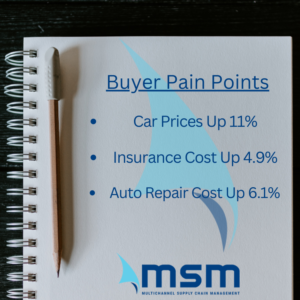
We know that buyers have less disposable income. To complicate it, while unemployment numbers have declined, we are also in the midst of The Great Resignation. The bottom line is, job stability is not exactly a strength on the loan application for most buyers. And, many have taken a credit hit during the pandemic. When you add that the average car price is up over 11% from last year, and the new loan average increasing 8.8%, even if buyers can get approved for financing, deciding to take on the loan payments is a challenging decision for your buyers.
Buyers Have Different Shopping Habits
The pandemic changed how buyers shop for cars. Or, perhaps more accurately, it sped up the shift of buying habits that was already underway. Enter, the rise of online car shopping and buying.
The US Market size for online dealers measured $45.1 billion last year. Sure, a portion of the growth is temporary, with car buyers not being able to physically go to auto dealers in person during the pandemic, but most of this growth is here to stay. The good news is that, while a majority of consumers prefer to shop for cars online, 67% of buyers prefer traditional dealerships as their place to purchase cars, None the less, dealers need to understand that increasingly, buyers want to at least be able to shop online, whether they end up actually purchasing within the dealership or not.
Buyers Have More Options
Having a car is a necessity for most Americans, and it has been for decades, if not going on nearly a century of automobile dependency. There are only a few major metropolitan cities left in which someone can get buy without any need for a car. However, this does not mean that drivers are dependent on owning a car.
Ride-sharing apps have changed the game for transportation. The global ride-sharing industry is nearing a $100 billion industry. The good news for auto dealers is that this has created a demand for ride-sharing drivers to have new cars and replace them more frequently. And, most ride-share app users do not use apps like Uber as a replacement for having their own car, but to supplement their transportation needs.
Buyers Have Higher Car Ownership and Usage Expenses
Not only is the cost of the actual car that buyers purchase higher, but all expenses related to owning a car and transportation have increased. Though gas prices have dropped slightly from their record highs, they are still over 50% higher than two years ago. The average cost of auto insurance is up 4.9%. The average cost to repair a car is up 6.1%. Everywhere buyers look, costs are going up. Buyers aren’t just thinking about the cost of the car itself when deciding to purchase but also thinking of all the costs that go along with the car and transportation.
Auto dealerships cant alleviate all of the economic concerns of their potential buyers but understanding their buyer’s economic pain can go a long way to attracting customers, closing sales, and creating customers for life. From marketing outreach designed around showing an understanding of the buyer’s challenging economic journey, to incentives that help alleviate the impact they are facing, and to working with them to find their best transportation solution, understanding the economic burdens of your buyers has endless value.